|

|
|
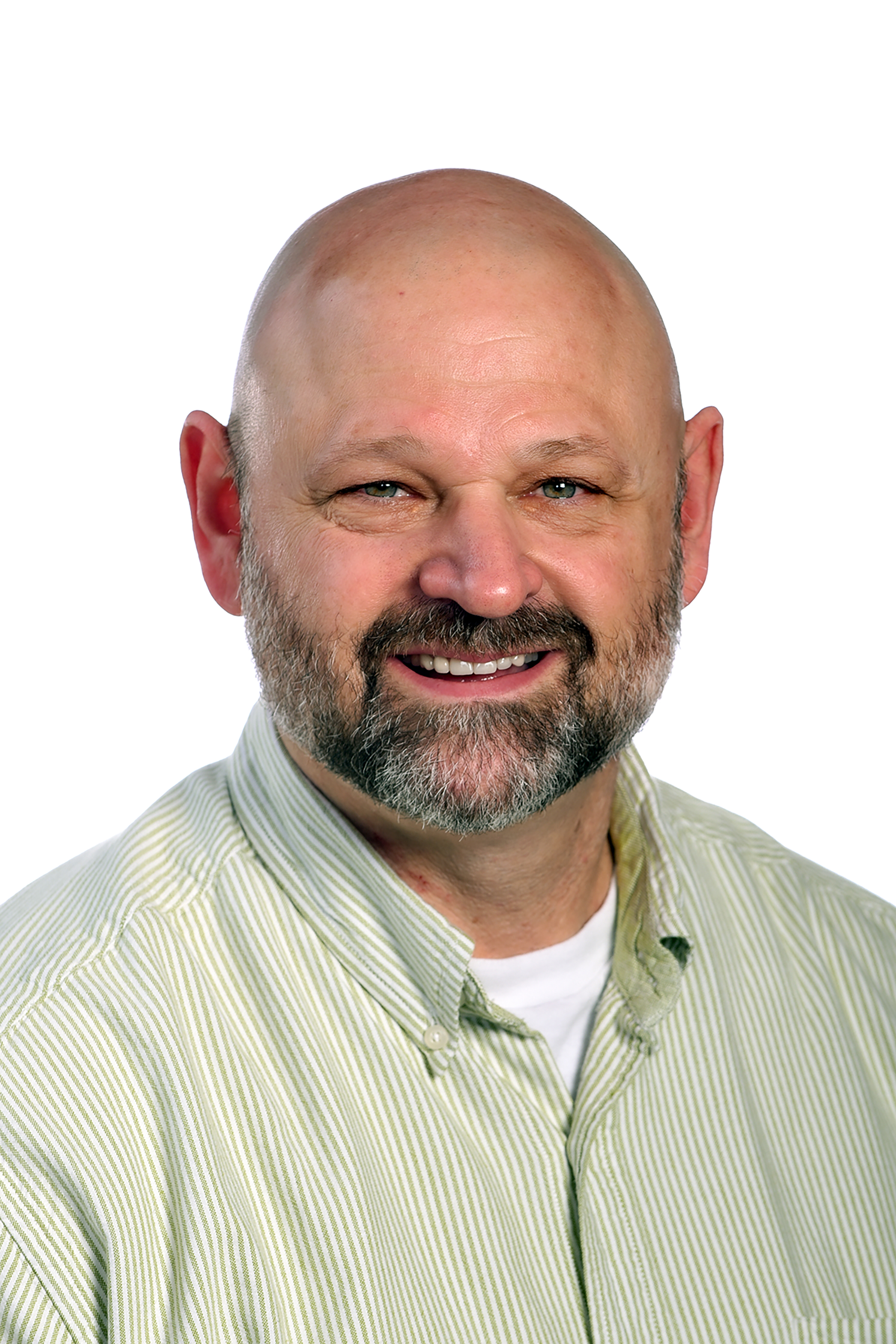
Timothy G.
Strein |
Professor of Analytical Chemistry
Presidential Professor
|
Department of Chemistry
Bucknell Univeristy
Lewisburg, PA 17837
(570) 577-1641, strein@bucknell.edu
|
| |
|
BS North Carolina State University, 1988 |
| |
|
PhD Penn State University, 1992 |
|
Electrochemistry
at Microvoltammetric Electrodes with Dr. Andrew G. Ewing |
| |
|
Camille and Henry Dreyfus Postdoctoral Fellow, Bucknell
University 1992-1994 |
|
Capillary Electrophoresis of Physiological
Fluids with Dr. Hans Veening |
| |
Research Interests: Bile salt micelle structure, In-capillary chemical
reations, electrophoretic stacking phenomena in CE, chiral separations
with CE, aqueous NMR, Isothermal titration calorimetry (ITC), microvoltammetric
electrodes.
|
Areas of Teaching Expertise: Analytical
Chemistry, Chemical Equilibria, Instrumental Analysis, Forensic
Chemistry, General Chemistry.
|
Service Interests: Promotion of undergraduate
research, Departmental Graduate (MS) Coordinator (1998-2006, 2015-),
member Bucknell Graduate Council (2002-), Program Co-Chair
MARM'06, Chair, Department of Chemistry (2010-2014), Acting Chair (2006-2007).
|
|
|
|
Department of Chemistry, Bucknell
University, Lewisburg, PA 17837 |
|
Bucknell Chemistry Department Web Site
Research
Interests | External
Funding | Recent Publications | Teaching
Interests | Former Group Members
| Research
Interests: Bioanalytical Chemistry |
The Strein group is interested in both the fundamentals and the applications of analytical techniques and technologies. We use many analytical techniques, notably including capillary electrophoresis (CE), aqueous NMR, isothermal titration calorimetry (ITC), inductively coupled plasma-mass spectrometry (ICP-MS), and dynamic electrochemistry at microelectrodes.
In our current work (2025) we are focused primarily on developing and characterizing rapid, inexpensive methods for chiral separations using capillary electrophoresis (CE). We are interested in the mechanism(s) that give rise to chiral separations with bile salt micelles by MEKC-CE, and the underlying thermodynamics that drive chiral selection.
In addition, we also have collaborative projects using (i) NMR to study bile micelle structure and (ii) ICP-MS to determine Li ion concentrations in human blood with an eye toward correlating endogenous Li levels to reveal underlying health issues.
The fantastic undergraduate and MS students in the group are central to all that we do. Current students in the group include:
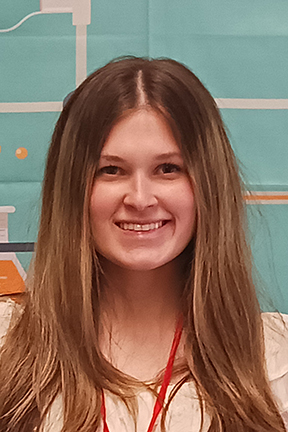
| Natalie Nareski
Rising Senior Chemistry Major |
Chiral Separations using MEKC with bile salt micelles: cholate and taurodeoxycholate (DTC).
ICP-MS of Li in human sera and correlation with succeptability to nuerological disorders
|
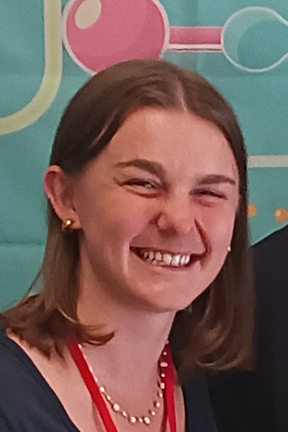 |
Abby Gavron
Rising Senior Chemistry Major
|
Chiral Separations using MEKC with bile salt micelles: taurodeoxycholate (TDC) |
For a list of former group members, and where they are now, click
here (continually under construction).
The George I. Alden Trust (with Elizabeth S. Richer) "High Performance Liquid Chromatography Instrument Acquisition" $150,000, 2025-2030.
Bucknell-Geisinger Research Initiative (with Dr. Cosmin Sandelescu and Dr. Marlen Mendelev, Geisinger) “The Impact of Smoking and Parkinson's Disease on Blood Lithium Concentration” $20,000, 2024-2025
.
NSF-ROA Suppliment to NSF Grant CHE-2004021 (Prof. Lisa Holland, PI) "Acoustically Driven, Voltage-Free Spray Interface to Couple Capillary Electrophoresis and Mass Spectrometry" $29,600, 2021-2022.
NSF-RUI Grant #CHE-1800401 (with David Rovnyak, Mike Krout, and Maria Salari) "Mechanism of High Enantiomeric Resolution with Bile Micelles" $211,552, 2018-2021.
Bucknell-Geisinger Research Initiative Grant (with Dr. Li Zhang) "Rapid Quantitative Analysis for Fentanyl with Ion Mobility Spectrometry" $49,990, 2016.
NSF-RUI Grant #CHE-1153052 (with David Rovnyak) "Molecular Characterization of Aggregation and Guest-Host Solvation by Bile Acids" $159,814, 2012-2016.
Beckman-Coulter Biopharma-to-Education Instrument Grant: "PA800 CE-LIF system" $75,000, 2012.
NIH AREA Grant #1 R15 EB003854-02 "Bioanalytical CE: Mixing, Reacting, Separating, Stacking" 2007-2011, $218,899
ACS-PRF "Examining hydrodynamic and solubilization
properties of micelles formed by chiral amphiphiles with NMR" with
David Rovnyak, 2007-2011 $55,000
NIH AREA Grant #1 R15 EB003854-01 "Polarity
Switching and Stacking in Bioanalytical CE" 2004-2007, $139,400.
NSF-MRI Grant # CHE-0521108 "Acquisition of a High-Resolution NMR Spectrometer to Advance Faculty and
Undergraduate Research," with David Rovnyak (principal author) and others, 2005-2008, $475,000.
Henry Dreyfus Teacher/Scholar Award TH-98-025,
"Activation, characterization and application of carbon fiber
microelectrodes," 1998-2203, $60,000.
Research Corporation Grant #CC4333, renewal of "Capillary electrophoresis of physiological fluids: Small molecules to
proteins," 1997-1999, $27,000.
NSF-ILI grant DUE-9551135, "Enhancement
of the Undergraduate Chemistry Experience with Bench-Top GC-MS," 1995-1998
$24,732.
Council on Undergraduate Research Academic-Industrial
Undergraduate Research Partnership (AIURP) Award, for summer research student
Cozette Cuppett.
1996 $3,000.
Research Corporation Grant # CC3788, "Capillary
electrophoresis of physiological fluids: Small molecules to proteins," 1995-1997 $28,500.
Camille and Henry Dreyfus Supplemental Grant
number SL-94-02, "Bioanalytical Chemistry at Bucknell" 1994, $10,000.
Camille and Henry Dreyfus Start-up Grant number
SU-94-011, "Development and use of capillary electrophoretic and microvoltammetric
methods of analysis, and their application to biologically interesting samples," 1994, $12,500.
Society for Analytical Chemists of Pittsburgh
Starter Grant, "Laser Activation at Carbon Fibers," 1994, $10,000.
NSF-ILI grant number DUE-9352607, "Capillary
Electrophoresis in the Undergraduate Curriculum," T. G. Strein (principal
author) with H. Veening, J. Swan, and C. Clapp, 1993-1996, $19,020.
Rovnyak, D.; He, J.; Kong, S.; Eckenroad, K.W.; Manley, G.A.; Geffert, R.M.; Krout, M.R.; Strein, T.G. “Determining Sequential Micellization Steps of Bile Salts with Multi-CMC Modeling” Journal of Colloid and Interface Science, Available online April 5, 2023, https://doi.org/10.1016/j.jcis.2023.03.146.
Elshamy, Y.S.; Strein, T.G. ; Holland, L.A.; Li, C.; DeBastiani, A .; Valentine, S.J.; Li, P.; Lucas, J.A. ; Shaffer, T.A. “Nanoflow Sheath Voltage-Free Interfacing of Capillary Electrophoresis and Mass Spectrometry for the Detection of Small Molecules, Analytical Chemistry, 2022, 94, 11329-11336 (DOI: 10.1021/acs.analchem.2c02074)
Meier, A.R.; Yehl, J.B.; Eckenroad, K.W.; Manley, G.A.; Strein, T.G. and Rovnyak, D. "Stepwise aggregation of cholate and deoxycholate dictates the formation and loss of surface-available chirally selective binding sites" Langmuir, 2018, 34(22), 6489-6501 (DOI: 10.1021/acs.langmuir.8b00467).
Anderson, S.L., Rovnyak, D., Strein, T.G. "Identification of Edible Oils by Principal Component Analysis of 1H NMR Spectra" Journal of Chemical Education, 2017, 94(9), 1377-1382 (DOI: 10.1021/acs.jchemed.7b00012).
Eckenroad, K., Manley, G., Yehl, J., Pirnie, R., Strein, T., Rovnyak, D. "An edge selection mechanism for chirally selective solubilization of binaphthyl atropisomeric guests by cholate and deoxycholate micelles" Chirality, 2016, 28, published online June 14, 2016 (DOI: 10.1002/chir.22609).
Anderson, S.A., Rovnyak, D., Strein T.G. “Direct Measurement of the Thermodynamics of Chiral
Recognition in Bile Salt Micelles” Chirality, 2016, 28, 290-298 (DOI: 10.1002/chir.22580)
Guy, Y.; Faraji, A.H.; Gavigan, C., Strein, T.G. and Weber, S.G. Iontophoresis From a Micropipette
into a Porous Medium Depends on the Zeta-Potential of the Medium Analytical Chemistry, 2012, 84,
2179-2187 (DOI: 10.1021/ac202434c).
Faraji, A.H.; Cui, J.J.; Guy, Y.; Li, L.; Gavigan, C.A. Strein, T.G. and Weber,S.G. “Synthesis and Characterization of a Hydrogel with Controllable Electroosmosis: A Potential Brain Tissue Surrogate for Electrokinetic Transport” Langmuir, 2011, 27 (22), pp 13635-13642 (DOI: 10.1021/la202198k).
Alcala, M.A.; Shade, C.M.; Uh, H.; Kwan, S.Y.; Bishof, M.; Thampson, Z.P.; Golick, K.A.; Meier, A.R.; Strein, T.G.; Bartlett, D.L.; Modzelewski, R.R.; Lee, Y.J.; Petoud, S.; Brown, C.K. “Preferential accumulation within tumors and in vivo imaging by functionalized luminescent dendrimer lanthanide complexes” Biomaterials, 2011, 32, 9343-9352. (DOI:10.1016/j.biomaterials.2011.07.076)
Stahl, J. W.; Catherman, A.D.; Ranasinghe S.K.; Strein, T.G. "Investigating the Effects of Conductivity of Zone Overlap with EMMA: Computer Simulation and Experiment" Electrophoresis, 2011, 32, 1492-1499. (DOI: 10.1002/elps.201000451)
Merola, E.T.; Catherman, A.D., Yehl, J.B.;
Strein, T.G. "Determination of Total Antioxidant Capacity of Commercial Beverage Samples by
Capillary Electrophoresis using 2,6-Dichloroindophenol" J. Ag and Food Chem., 2009, 57(15), 6518-6523. (DOI: 10.1021/jf901214r)
Mason, P.; Strein T.G. “ In-capillary determination of
creatinine with electrophoretically mediated microanalysis:
characterization of the effects of reagent zone and buffer conditions ”
Journal of Chromatography A, 2009, 1216,154-158. (DOI: 10.1016/j.chroma.2008.11.033)
Hebling,
C.M.; Eckenroad, K.W.; Rovnyak, D.; and Strein, T.G. “Sodium Cholate
Aggregation Observed by Nuclear magnetic Resonance Spectroscopy of the
Probe Molecule (R,S) 1,1'-bunapthyl-2,2'- dihydrogenphophate (BNDHP)”
Langmuir, 2008, 24,13866-13874. (DOI:10.1021/la802000x)
Eckenroad,
K.W.; Thompson, L.E.; Strein, T.G.; Rovnyak, D. "Proton NMR assignments
for R,S-1,1-binapthyl (BN) and R,S-1,1-binaphthyl-2,2-diyl hydrogen
phosphate (BNDHP) interacting with bile salt micelles" Magnetic
Resonance in Chemistry,2006, 45, 72-75. (DOI: 10.1002/mrc.1916).
Sanders, B.D.; Slotcavage, R.L.; Scheerbaum, D.L.; Kochansky, Christopher J;
.Strein, T.G. "Increasing the Efficiency of In-Column Reactions via Rapid
Polarity Switching" Analytical Chemistry, 2005,
77, 2332-2337. (DOI: 10.1021/ac048595u)
Teaching Area: Anlaytical Chemistry
CHEM 231 Analytical Chemistry I: Quantitative Analysis course
for sophomore and junior Chemistry and Biochemity majors
CHEM 332 Analytical Chemistry II: Instrumental Analysis course
for junior and senior level Chemistry and Biochemistry majors
CHEM 386/686 Seminar Course in Separations Science for MS students and upper level undergraduates
CHEM 358/BIOL 340 Biochemical Methods Laboratory course for junior and senior Biochmistry majors
CHEM 205 Principles of Chemistry I: Entry level college chemsitry course for science majors
CHEM 337 Special Topics in Analytical Chemisty including forensic
chemistry, DNA analysis, and chemistry on Mars.
CHEM 403 Research in Chemistry Capstone Course for Seniors
CHEM 340 Lab Biophysical Chemistry lab for junior/senior BS biochemistry majors and BA chemsitry majors
CHEM 203 General Chemistry: College Chemistry course for sophomore
engineers
FOUN 098,090 Forensic Chemistry Foundation Seminar
SIMUL files for remote access
Bucknell Chemistry Department Web Site
Cell Biology /
Biochemistry program
last edited 07/22